
What Is Regenerative Coffee?
– Sam Knowlton – This article first appeared on www.falcononfarm.com The global coffee industry encompasses 12.5 million farming families cultivating over 11 million hectares across more than 70 countries, generating


– Sam Knowlton – This article first appeared on www.falcononfarm.com The global coffee industry encompasses 12.5 million farming families cultivating over 11 million hectares across more than 70 countries, generating
Kate Monteiro – Head of Global Sustainability I’m not sure if it’s my curiosity or my restlessness that has drawn me into so many different roles over the years. Whatever

Increasing farmers’ coffee yields and quality has proven to have the biggest direct impact on farmer household income. In partnership with sister company Rwanda Trading Company (RTC), Falcon is committed

“In the global coffee industry, valued at nearly $200 billion, millions of smallholder farmers, particularly women, face systemic challenges. Many live below the poverty line, earning less than $3.50 a

World Coffee Research (WCR) is a non-profit agricultural research organisation established in 2012 to drive innovation in coffee agriculture. Its mission is to enhance coffee quality, reduce supply chain risks,

PERU: We believe that Peru has the potential to match up on quality to any of its origin counterparts in Latin America. We set out to prove this. Origin: Peru,
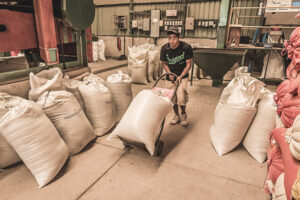
Sustainable coffee agroforestry systems can be the best alternative for healthy, functional watersheds, second only to natural forests. Falcon is a commercial partner for Blue Harvest promoting these agricultural practices

EL SALVADOR: We would like to congratulate the Renacer Field School on winning the Project category of 2023’s SCA Sustainability Award. This award recognises outstanding work in the field of

Coffee is grown in and around the tropical rainforests of Africa, Asia and the Americas. Two globally recognised environmental needs are to protect these tropical rainforests and to reduce carbon

UK: As well as endeavouring to improve our practices on a corporate, operational level, we are also looking at what we can do closer to home, whether it be behavioural

COLOMBIA: For the farmers of the San Lorenzo region of Colombia, coffee production is their principal way of life. Yet food insecurity and poverty are ever-present threats to communities of

Coffee is grown in and around the tropical rainforests of Africa, Asia and the Americas. Two globally recognised environmental needs are to protect these tropical rainforests,and to reduce carbon emissions

HONDURAS: The Aruco Cooperative was established in 2006 with 14 farmers with a desire to access supply chains and pricing that reflected their coffee’s true quality. We were introduced to
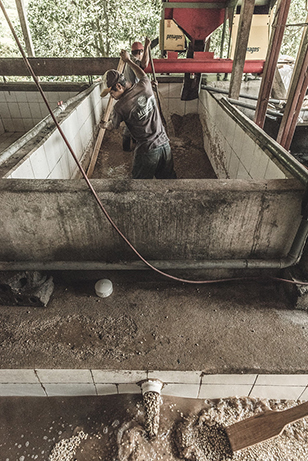
PERU: Quality drives market demand at premium prices, immediately impacting household revenue. Quality demands training and investment, opening the door to Good Agricultural Practices and incentivising improved environmental stewardship. There